China is sending a clearer message to foreign businesses in 2026: it wants more long-term investment, especially in high-tech industries, research, services, and projects that keep capital inside the country.
In June 2026, China’s Ministry of Commerce, National Development and Reform Commission, and Ministry of Finance introduced a new 15-measure Action Plan for Stabilizing and Optimizing the Utilization of Foreign Investment. The measures cover market access, reinvestment, cross-border data transfers, R&D, mergers and acquisitions, government procurement, and support for foreign-invested companies (Ministry of Commerce). The timing is critical.
During the first seven months of 2026, 37,711 new foreign-invested enterprises were established in China, up 4.4% year over year. At the same time, actual foreign investment fell 6.2%, to RMB 438.33 billion.
The composition of that investment, however, is changing quickly. Foreign investment in high-tech industries increased 32.7%, while investment in R&D and design services jumped 72.1%. High-tech industries already accounted for 41.6% of all foreign investment actually used in China during the period (Ministry of Commerce).
China is therefore not simply trying to attract more foreign capital. It is increasingly trying to attract capital that stays, expands, develops technology, and becomes integrated into the domestic economy.
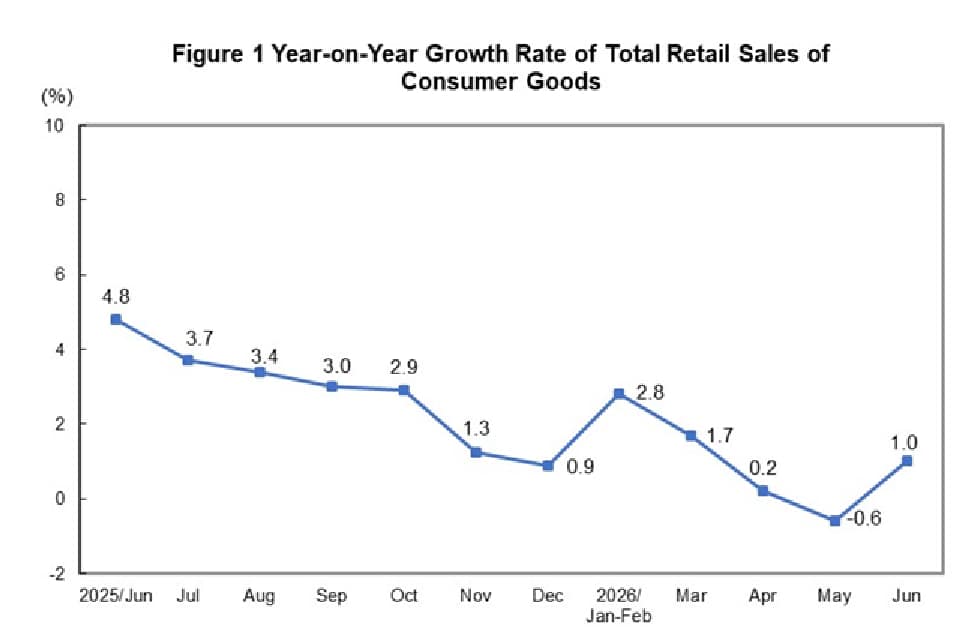
For companies considering China as a sales market, the opportunity is equally difficult to dismiss. In the first half of 2026, China’s online retail sales of goods and services reached RMB 10.07 trillion, growing 5.2% year over year. Online sales of physical goods reached RMB 6.43 trillion, up 4.8%. By comparison, total retail sales of consumer goods increased by only 1.3% during the same period (National Bureau of Statistics of China).
That gap matters. China remains not only one of the world’s largest consumer markets, but also a market where digital commerce continues to grow faster than retail overall. Yet improving investment conditions do not make China an easy market to enter.
According to the US-China Business Council 2026 Member Survey, 95% of respondents consider their China operations somewhat to very important for remaining globally competitive, but only about half plan to invest in China this year. At the same time, 65% cite competition from Chinese companies as a major constraint on profitability (US-China Business Council).
The opportunity and the challenge are therefore developing simultaneously. For a foreign company, entering China in 2026 is less a question of whether the market is large enough. The more important questions are how to enter it, which sales channels to use, how much infrastructure to localize, and how much control over commerce operations the company ultimately wants to retain.
Key Takeaways
- China introduced a new 15-measure foreign investment action plan in June 2026, covering market access, reinvestment, R&D, cross-border data, M&A, and equal treatment of foreign-invested enterprises.
- The number of newly established foreign-invested companies increased 4.4% in January–July 2026, even as total utilized foreign investment declined 6.2%.
- Foreign investment is shifting toward technology: FDI in high-tech industries grew 32.7%, while R&D and design investment increased 72.1%.
- China’s online retail market continues to outperform retail overall: online sales grew 5.2% in H1 2026 compared with 1.3% growth in total consumer retail sales.
- China remains strategically important for international companies, but local competition is becoming stronger. 65% of US-China Business Council survey respondents cite Chinese competitors as a constraint on profitability.
- Foreign businesses generally have three broad eCommerce entry options: cross-border eCommerce, establishing a local operation, or building their own commerce channel. In practice, larger companies may combine all three.
What Changed for Foreign Companies in China in 2026?
China has spent several years gradually reducing restrictions on foreign investment. Manufacturing restrictions have now effectively been removed at the national level, while much of the current policy attention is shifting toward services, technology, healthcare, finance, and other sectors where access remains more complex.
The June 2026 Action Plan accelerates that direction. It does not amount to unrestricted market access. Some measures are already active, some expand existing programs, and others are commitments to develop or revise regulations. For companies evaluating China, that distinction is important.
| Area | What is changing | Why it matters |
| Market access | Further opening is planned in selected services, education, digital economy, pharmaceuticals, healthcare, and finance | More sectors may become accessible to foreign investors |
| Profit reinvestment | Existing tax incentives for reinvesting profits are being actively promoted | Makes expanding an existing Chinese operation more attractive |
| R&D | Greater support for foreign-funded research centers and international talent | Encourages companies to use China for product development, not only production |
| Government procurement | Foreign-invested enterprises are to receive national treatment except where legislation or national security rules provide otherwise | Potentially improves access to public-sector contracts |
| Cross-border data | More pilot regions can develop sector- and scenario-specific negative lists | Could make international data flows more predictable |
| M&A | China plans further revisions to rules governing foreign acquisitions of domestic companies | May simplify some acquisition and investment structures |
| Strategic investment | Eligible foreign investment institutions may invest strategically in listed companies outside related industries | Broadens investment options for qualified investors |
The important point is that these measures do not all represent completed reforms. For example, China is still developing parts of its cross-border data framework and examining further expansion of pilot programs allowing wholly foreign-owned hospitals and additional biotechnology activities. Foreign companies should therefore treat the Action Plan as a direction of travel, rather than assume that every announced opening is immediately available nationwide.
Reinvesting Profits Is Becoming More Attractive
One of the more tangible incentives predates the 2026 Action Plan but is now part of China’s broader strategy for keeping foreign capital inside the country. Foreign investors that use profits distributed by Chinese resident enterprises for eligible direct investment can receive a tax credit of up to 10% of the reinvested amount.
The measure applies to qualifying investments made between January 1, 2025 and December 31, 2028. Eligible investments can include capital increases, establishing new companies, and certain equity acquisitions. The investment generally needs to be maintained for at least five years (State Taxation Administration).
For multinational companies already generating profits in China, the policy changes the calculation slightly. Instead of automatically repatriating earnings, a company may have a stronger incentive to use part of those earnings to:
- expand manufacturing or fulfillment capacity;
- launch additional business units;
- invest in R&D;
- acquire or invest in another Chinese company;
- develop additional sales and distribution operations.
The 2026 Action Plan explicitly calls for continued implementation of these reinvestment incentives and for more foreign reinvestment projects to be incorporated into major and priority foreign-investment programs (Action Plan). That suggests China is increasingly interested not just in attracting first-time investors, but in persuading existing foreign companies to deepen their presence.
China Wants More Foreign R&D, Not Just Foreign Factories
Another notable shift is the growing emphasis on research and development. China has historically been central to international supply chains because of manufacturing capacity, infrastructure, suppliers, and scale. But the country’s investment policy increasingly presents China as a place where multinational companies should also develop products and technology.
The trend is already visible in investment data. In January–July 2026 (as per the Ministry of Commerce):
- foreign investment in high-tech industries grew 32.7%;
- investment in R&D and design services grew 72.1%;
- investment in services supporting the commercialization of scientific and technological achievements grew 62.2%;
- foreign investment in electronic and telecommunications equipment manufacturing increased 39.9%.
The new Action Plan reinforces this trend by calling for better support for foreign-invested R&D centers, open innovation platforms, training and practice bases, and the commercialization of research results. For technology companies, this creates a different type of China strategy.
A Chinese operation no longer has to be viewed only as a local sales office or manufacturing subsidiary. For some companies it can become a combination of: sales + distribution + manufacturing + R&D + local partnerships.
That deeper localization can also change the requirements for the company’s digital infrastructure. A business selling through one cross-border marketplace has very different requirements from a company managing local distributors, corporate buyers, warehouses, product catalogs, and independent sales channels.
Foreign Companies Are Supposed to Receive More Equal Treatment
The Action Plan also addresses a long-running concern among foreign companies: whether formally open markets translate into equal operating conditions. The document calls for the full implementation of national treatment for foreign-invested enterprises. Unless laws, regulations, or national security requirements specify otherwise, enterprise-support policies should apply equally to foreign-invested companies. The same principle is explicitly extended to government procurement and bidding. Universities, research institutes, and other organizations conducting procurement are also expected to allow foreign-invested enterprises to participate on equal terms. The policy is important, but foreign business sentiment shows why execution matters as much as the rules themselves.
The US-China Business Council found that most surveyed companies believe the business environment has either stagnated or deteriorated over the past year. Only around half intend to make new investments in China in 2026. The contradiction is revealing. China is progressively removing formal barriers while foreign companies increasingly worry about commercial rather than purely regulatory competition.
The Bigger Challenge Is Becoming Competition
For years, discussions about entering China focused heavily on regulatory barriers. Those barriers still matter, particularly in regulated industries. But for many companies another issue is becoming just as important: competing with Chinese businesses.
In USCBC’s 2026 survey, competition from Chinese companies became the top constraint on profitability, cited by 65% of respondents. At the same time, almost half of surveyed companies said they apply lessons learned from their Chinese operations in other international markets (US-China Business Council).
That tells us something important about the Chinese market. China is not only large. It is an environment where companies compete against businesses accustomed to rapid product development, aggressive pricing, highly digital customer journeys, sophisticated marketplaces, and extremely short innovation cycles. As a result, market entry should not simply answer: Can we legally sell in China? It should answer: Can our operating model compete in China?
That includes product positioning, pricing, fulfillment, customer service, payments, marketing, and the technology used to manage sales.
Learn more:
- How to Pitch Your MVP to Raise Funds for Growth in 2025
- Marketplace Payments & Fee Mechanics: How to Calculate Your Real Costs Before Launch
- Marketplace Marketing Strategy: A Practical Guide to Growth and Liquidity
Why China Is Still Difficult to Ignore
Despite slower growth in some parts of the Chinese economy, eCommerce remains enormous. Online retail sales of goods and services reached 10.07 trillion in the first six months of 2026, up 5.2% year over year. Physical goods sold online accounted for 6.43 trillion. Within that category (National Bureau of Statistics):
- online food sales grew 16.8%;
- clothing sales increased 6.2%;
- daily-use goods increased 1.3%.
More importantly, online commerce continues to grow considerably faster than overall retail. Total Chinese consumer retail sales increased only 1.3% during the same period. For international brands, manufacturers, wholesalers, and distributors, this means that a China market strategy increasingly becomes an eCommerce strategy as well. The question is which form that strategy should take.
Three Ways Foreign Companies Can Enter China’s eCommerce Market
There is no single route into Chinese eCommerce. A foreign company testing demand requires a very different setup from a multinational building a permanent Chinese operation. The appropriate approach also depends on whether products are stored inside China, who imports them, how payments are processed, and whether the business sells directly to consumers or through distributors. Most market-entry strategies fall into three broad categories.
1. Start With Cross-Border eCommerce
Cross-border eCommerce, commonly shortened to CBEC, allows overseas companies to sell certain goods to Chinese consumers without establishing the same full domestic retail infrastructure required for a conventional local operation. For many foreign brands, it is the lowest-commitment way to test Chinese demand.

Products can be sold through cross-border channels such as Tmall Global or JD Worldwide, depending on the brand, category, and operating model.
This route can reduce some of the initial barriers associated with establishing a full domestic operation. A company can validate:
- product demand;
- acceptable pricing;
- customer acquisition costs;
- category competition;
- logistics;
- brand recognition.
Before committing substantially more capital. The trade-off is control. A marketplace provides access to traffic and an established commerce ecosystem, but the brand operates within the marketplace’s rules, fee structure, customer experience, promotional environment, and data limitations. That makes CBEC particularly useful as a market-validation strategy, rather than automatically the final operating model for every company.
2. Establish a Local Chinese Operation
Companies with stronger demand, significant local inventory, employees, contracts, or long-term expansion plans may instead establish a mainland Chinese business entity. One commonly discussed structure is the Wholly Foreign-Owned Enterprise (WFOE), although the correct entity and ownership structure depends on the industry and activity involved.
A local operation can make it easier to build a more complete commercial infrastructure around China:
- local employees;
- Chinese warehouses;
- domestic logistics;
- local contracts;
- distributor relationships;
- local payment arrangements;
- domestic marketplaces;
- direct B2B or B2C sales.
It is also a much larger commitment. Companies need to consider corporate registration, taxation, sector-specific licensing, bookkeeping, employment rules, data regulations, customs, intellectual property, and product-specific requirements. For that reason, choosing a legal entity should follow the business model rather than precede it. The first question should not be: Which Chinese company structure should we register? It should be: What exactly are we planning to sell, to whom, through which channels, and where will the operational activities take place? Only then does the appropriate corporate structure become clearer.
3. Build an Owned eCommerce Channel
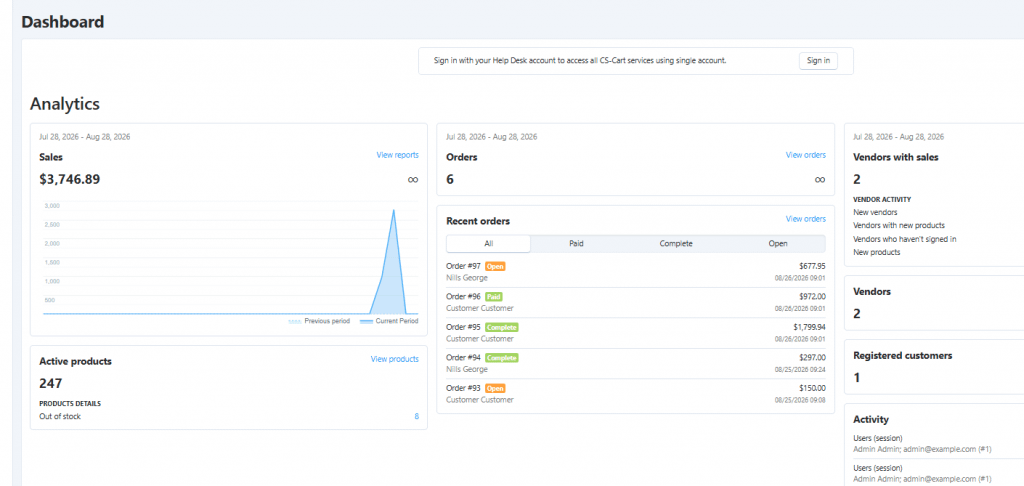
Interface of CS-Cart Multi-Vendor
The third option is frequently overlooked because discussions about Chinese eCommerce tend to focus on large marketplaces. Yet companies making a long-term investment often need digital commerce infrastructure of their own. An owned eCommerce channel does not necessarily replace Tmall, JD, Douyin, or other Chinese platforms. In many cases it serves a different purpose. A company may use major marketplaces for customer acquisition while using its own commerce infrastructure for:
- direct sales;
- B2B customers;
- distributors and dealers;
- specialized catalogs;
- customer-specific pricing;
- repeat purchases;
- procurement;
- vendor management;
- international operations;
- integration with ERP, CRM, inventory, and fulfillment systems.
This distinction becomes increasingly important as a company’s presence in China grows. Selling a limited catalog through one marketplace is primarily a channel-management problem. Managing thousands of products, several warehouses, distributors, corporate buyers, third-party sellers, and multiple markets becomes a commerce-infrastructure problem. And that leads to another important strategic decision: whether a foreign company should depend mainly on existing Chinese marketplaces or gradually build a commerce environment it controls itself.
Read more:
- How to adopt the best practices of Chinese marketplaces
- Global Marketplaces — Best Online Marketplaces 2025
Marketplace vs. Your Own eCommerce Platform in China
For many foreign companies, entering Chinese eCommerce does not mean choosing between a marketplace and an independent online store. The two channels solve different problems. Large Chinese marketplaces provide something that is difficult and expensive for a new entrant to build from scratch: existing traffic, consumer trust, payments, and a familiar shopping environment. An independent commerce platform provides something marketplaces cannot fully offer: control.
| Chinese marketplace | Own eCommerce platform | |
| Existing customer traffic | High | Must be acquired |
| Speed of initial market entry | Faster | More preparation required |
| Brand control | Limited | High |
| Customer relationship | Largely platform-controlled | Direct |
| Platform dependency | High | Lower |
| Custom business processes | Limited by platform | Flexible |
| B2B workflows | Usually limited | Can be built around the business |
| Third-party sellers | Controlled by marketplace | Business defines the model |
| Integrations | Platform-dependent | Business-controlled |
| Expansion to other markets | Depends on platform | Easier to manage centrally |
This is why the decision should not necessarily be framed as marketplace vs. own store. For a company making a long-term investment in China, a hybrid approach may be more practical. A foreign brand can use established marketplaces to reach consumers while developing its own digital commerce infrastructure for direct customers, B2B accounts, distributors, repeat purchases, or specialized product lines. The balance can also change over time. A business might enter China through cross-border eCommerce, establish a local operation once demand has been validated, and later add its own sales channel as the number of customers, products, partners, and internal processes grows. In other words, marketplaces can be an entry channel without becoming the entire eCommerce strategy.
Get deeper insights from: eCommerce Store vs Marketplace: What’s the Difference
What Your eCommerce Infrastructure Needs to Handle in China
The deeper a foreign company becomes involved in China, the less likely a generic online storefront is to cover all of its requirements. A company selling 50 products through a cross-border marketplace has a relatively simple technology problem. A company managing thousands of SKUs, Chinese and international customers, multiple warehouses, wholesale accounts, distributors, local partners, and several sales channels has a fundamentally different one. Before choosing an eCommerce platform, companies should consider several areas.
Localization Beyond Translation
Localization starts with language, but it does not end there. A Chinese storefront may need localized product information, pricing, promotions, customer communication, navigation, checkout flows, and content. The underlying platform should therefore make it possible to manage different storefronts and adapt their catalogs, currencies, languages, content, and business rules without maintaining completely separate systems for every market. This becomes particularly important for international companies that want China to remain part of a broader global eCommerce operation rather than become an isolated technology stack.
Payments
Payment behavior in China differs considerably from many Western markets. Mobile payments dominate everyday transactions, with ecosystems built around services such as Alipay and WeChat Pay. Foreign businesses therefore need to determine which payment methods are available for their particular corporate structure and sales model and how those systems will connect with their commerce infrastructure. For a platform decision, the broader requirement is flexibility. Payment options, providers, and regulations can change. An eCommerce system that allows businesses to add or develop integrations gives the company more room to adapt than a closed architecture with a fixed set of payment methods.
Logistics and Inventory
The same principle applies to logistics.
A company testing China through cross-border eCommerce may ship products internationally or use bonded warehouses. A mature local operation may instead work with domestic warehouses, fulfillment partners, distributors, or its own logistics infrastructure.
Those differences affect:
- inventory synchronization;
- warehouse management;
- shipping calculations;
- order routing;
- returns;
- product availability;
- fulfillment integrations.
The eCommerce platform does not have to perform every logistics function itself. It does, however, need to exchange information reliably with the systems that do.
B2B Commerce
Not every foreign company entering China is selling directly to consumers. Manufacturers, wholesalers, industrial suppliers, and international distributors may need to sell to Chinese businesses rather than individual shoppers. That changes the eCommerce requirements significantly. B2B buyers may require:
- company accounts;
- multiple users under one organization;
- customer-specific catalogs;
- individual price lists;
- volume discounts;
- bulk ordering;
- quotation workflows;
- approval processes;
- negotiated payment terms;
- repeat ordering;
- integration with ERP or procurement systems.
In these cases, evaluating an eCommerce platform primarily by its storefront design misses much of what matters. The platform becomes part of the company’s operational infrastructure.
Read more: Marketplace Seller Management: How to Find and Attract B2B Wholesale Vendors and Suppliers
Cross-Border Data
Data deserves particular attention in 2026 because it is one of the areas explicitly addressed by China’s new foreign investment policies. China has already modified its cross-border data regime in recent years, including the introduction of exemptions from some security assessment and contractual requirements under specified conditions. The 2026 Action Plan goes further by supporting pilot free trade zones and selected cities in developing scenario- and sector-specific negative lists for cross-border data transfers. It also calls for national standards for identifying important data in sectors including telecommunications, automotive, pharmaceuticals, aviation, aerospace, and geoinformation (Action Plan).
For an international eCommerce company, this is not an abstract compliance issue.
A commerce operation can generate and exchange:
- customer information;
- orders;
- payment-related data;
- inventory information;
- analytics;
- supplier data;
- employee information;
- support records;
- marketing data.
If systems in China exchange information with a global CRM, ERP, analytics platform, headquarters, or other international infrastructure, companies need to understand which data crosses borders and under what conditions.
The safest approach is to make data architecture part of market-entry planning, rather than attempt to solve it after the commerce infrastructure has already been deployed.
When Does a Multi-Vendor Marketplace Make Sense?
An independent online store is not the only owned-commerce model available to a foreign company. Some businesses may eventually have a reason to operate a marketplace of their own. This does not make sense for every company entering China. A brand simply looking to sell its own products usually does not need multi-vendor technology. The model becomes more relevant when the business itself acts as an intermediary between multiple suppliers and buyers. For example, a company might want to:
- bring regional distributors onto one platform;
- create a digital dealer network;
- aggregate products from several manufacturers;
- connect Chinese suppliers with international buyers;
- create a vertical B2B marketplace;
- allow local partners to sell through a shared storefront;
- digitize an existing offline supplier network.
Consider an international industrial company with dozens of authorized distributors. Instead of operating a conventional online store with a single inventory source, it could create a platform where distributors manage their own products, stock, orders, and fulfillment while the central company controls branding, catalog standards, commissions, permissions, and the overall customer experience. A different company might build a specialized sourcing marketplace connecting Chinese manufacturers with business buyers in Europe, North America, or other Asian markets. These models require a different technology architecture from a standard online store. The system needs to manage not only products and customers, but also vendors. Typical requirements include:
- vendor registration and approval;
- separate seller accounts;
- seller product management;
- commissions;
- order splitting;
- vendor payouts;
- permissions;
- seller performance management;
- multiple warehouses or fulfillment models;
- communication between marketplace operator, sellers, and customers.
This is where the distinction between an eCommerce platform and a multi-vendor marketplace platform becomes important.
How to Choose an eCommerce Platform for China
There is no universal “best eCommerce platform for China”. A company testing five products through Tmall Global needs something very different from a manufacturer building a Chinese B2B operation or an enterprise launching a marketplace with local suppliers. Instead of beginning with software brands, companies should begin with their operating model. A useful evaluation starts with five questions.
1. Who Will Sell?
- Will the company sell only its own products?
- Will regional distributors participate?
- Could third-party suppliers eventually join?
If multiple independent businesses need to manage products and orders, marketplace functionality may be required from the beginning.
2. Who Will Buy?
A consumer storefront, B2B portal, dealer network, and procurement marketplace have very different requirements. A B2B business should pay particular attention to company accounts, permissions, customer-specific pricing, bulk purchasing, and integrations rather than selecting software based mainly on consumer storefront features.
3. Which Systems Need to Connect?
List integrations before choosing the platform. They may include:
- ERP for inventory and accounting
- CRM for customer and sales information
- PIM for product data
- WMS for warehouses and fulfillment
- Payment providers for transactions
- Shipping providers for delivery
- Marketplaces for additional sales channels
- Analytics for reporting and attribution
A platform may not have every local integration available out of the box. The important question is whether the architecture allows the required integrations to be built.
4. How Much Control Does the Business Need?
SaaS platforms can reduce initial technical work but typically place more restrictions on infrastructure and customization. A self-hosted or source-code-accessible platform requires more technical responsibility but can provide greater control over integrations, business logic, deployment, and data architecture. Neither approach is automatically better. The appropriate choice depends on whether the company values speed and standardization or expects substantial localization and custom development.
Learn more: Best Self-Hosted eCommerce Platforms Compared: Open Source Options You Can Fully Control
5. What Happens If the Business Model Changes?
This question is easy to overlook. A company may begin with: one country → one storefront → one warehouse → B2C and later operate: multiple countries → several storefronts → multiple warehouses → B2B + B2C → distributors or third-party sellers.
Replacing the commerce platform after reaching that stage can be considerably more difficult than planning for expansion at the beginning. The platform should therefore fit not only the launch model, but the realistic next stage of the business.
China Market Entry Checklist for eCommerce Companies
Before launching, a foreign company should be able to answer these ten questions:
Is there validated demand? Test the market, category, pricing, and competition before committing to a large infrastructure project. Is foreign investment permitted in the sector? Check China’s current foreign investment negative lists and industry-specific restrictions.
Will you use cross-border eCommerce or establish a local entity?
The answer affects taxation, imports, payments, employment, logistics, and platform access.
Have trademarks and other intellectual property been protected?
IP planning should happen before significant brand promotion or market entry.
Which sales channels will you use?
Determine the roles of marketplaces, social commerce, distributors, B2B sales, and owned channels.
Where will inventory be stored and fulfilled?
Compare international shipping, bonded warehouses, domestic warehouses, and local fulfillment partners.
Which payments need to be supported?
Payment infrastructure should match the legal entity, customer segment, and sales model.
Which data will cross China’s borders?
Map customer, order, employee, supplier, analytics, and operational data flows.
Which systems need to integrate with eCommerce?
Identify ERP, CRM, PIM, WMS, logistics, marketplace, payment, and analytics requirements.
Which part of the commerce infrastructure should the company own?
Decide where third-party platforms are sufficient and where greater control over customers, data, business processes, and technology is strategically important.
This final question becomes more important the longer a company plans to operate in China.
A marketplace can be an excellent way to access a market. It is less suited to becoming the only piece of digital infrastructure behind a complex international business.
Where CS-Cart Fits
For companies that decide they need an independent commerce layer, CS-Cart provides two main approaches.
CS-Cart Store Builder is designed for companies operating their own online stores. It can be used for B2C and B2B commerce and customized around specific catalogs, pricing models, integrations, and business processes.
CS-Cart Multi-Vendor is designed for businesses where multiple independent sellers, suppliers, or distributors operate through the same marketplace. Vendors receive their own management environments while the marketplace operator controls the platform, seller permissions, commissions, products, orders, and overall business rules.
The important advantage for an international project is not a specific China feature. It is control over the commerce architecture. CS-Cart provides flexible architecture and APIs, which allows businesses and development teams to build the integrations and workflows required for a particular market rather than limiting the operation to a fixed set of built-in scenarios.
That can be relevant for Chinese projects requiring connections with local payment, logistics, ERP, CRM, warehouse, or other third-party systems.
It also means the same underlying commerce strategy can extend beyond one market.
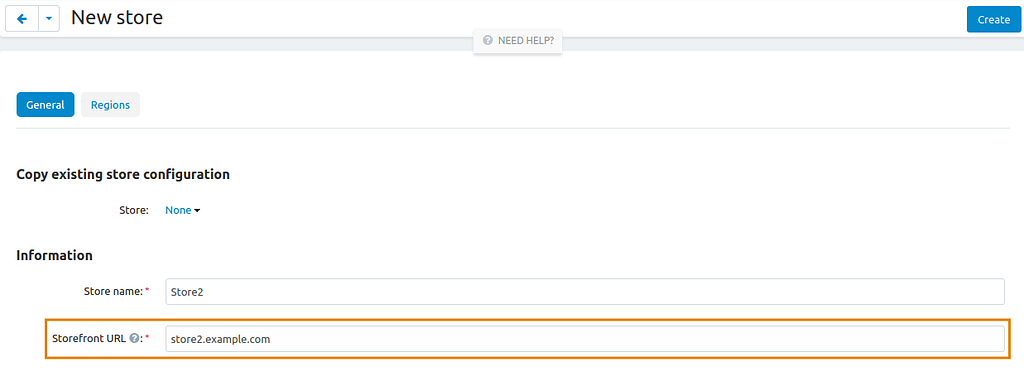
Multiple storefronts in CS-Cart allowing to have several stores under one admin panel
For example, an international company could operate localized storefronts for different regions while connecting them with its wider inventory, product, customer, and enterprise systems. A marketplace operator can similarly create a vendor network that is not necessarily limited to sellers or buyers from one country.
Learn more from: CS-Cart Essentials: How to Create a Multi Store eCommerce Platform with CS-Cart
This is particularly relevant to the direction China’s 2026 investment policy is encouraging. If a company enters China simply to test demand, an existing marketplace may provide most of the infrastructure it initially needs. If China becomes a long-term market involving local employees, warehouses, distributors, B2B customers, suppliers, R&D, and integrations with global systems, the requirements change. At that point, the question is no longer simply where to sell products in China. It is how to build a commerce infrastructure that the company can control, integrate, and continue developing as its Chinese operation grows.
Final Thoughts
China’s 2026 foreign investment measures should not be interpreted as evidence that entering the market has suddenly become simple. They indicate something more specific. China is trying to make the country more attractive to foreign businesses willing to make longer-term commitments—particularly companies investing in technology, research, advanced industries, services, and expansion of existing operations.
At the same time, the commercial environment remains demanding. Foreign companies face sophisticated domestic competitors, rapidly changing digital channels, regulatory requirements, and customers accustomed to highly developed eCommerce experiences. That makes market-entry strategy more important, not less. For some companies, cross-border eCommerce will be enough to test the opportunity. Others will need a local entity and domestic operations. Larger businesses may eventually combine Chinese marketplaces, direct eCommerce, B2B channels, distributors, and their own digital infrastructure. The technology decision should follow that strategy. If your long-term China plan requires an independent online store, B2B commerce platform, or marketplace with multiple suppliers and distributors, explore CS-Cart’s eCommerce and marketplace solutions.

eCommerce expert with 10+ years of experience in marketplace management and consumer behavior. Gayane tracks the latest industry trends to provide businesses with analytical, actionable insights.