
Which is the Best Marketplace System in 2024
If you are looking to expand your eCommerce business, building a multi vendor marketplace is the next venture to include in your strategic plan.
Multi vendor eCommerce websites represent a staggering opportunity for eCommerce businesses across a variety of sectors. The new research results from iBe, the pan-European financial services advisory firm, said that currently half (50%) of online retail sales come through online marketplace channels worldwide. iBe also predicts that sales driven from multi vendor online marketplaces are likely to exceed $7 trillion in the next five years (compared to today’s $1.7 trillion) which hails a new era in eCommerce.
This rise is driven by more and more companies embracing multi vendor ecommerce platform to increase product range, expedite cross-border expansion, and improve logistics, costs, and operations.
However, to effectively run an online marketplace you need a marketplace system that is designed grounds up to have full control over the administration vendor relationship as it is the key to successful ecommerce marketplace completion.
Best Multi Vendor Marketplace Software in 2024
In this article, we will go over the most essential features a marketplace system should have and give a brief review of top popular marketplace software providers:
- CS-Cart
- Yo!Kart
- Jungleworks Yelo
- Spryker
- Mirakl
- Arcadier
- Sharetribe
- Shopify
- Marketplacer
- BigCommerce Multi Vendor
- Magento Marketplace Extension
- WCFM Marketplace
- WordPress Dokan Plugin
- Cocorico Multi Vendor
- X-Cart
- IXXO Multi Vendor
- ZielCommerce
Contents
What is multi vendor marketplace system?
How to choose multi vendor marketplace software for your business?
How are multi vendor solutions different from a common website?
Unique features of a multi vendor marketplace software
Top multi vendor marketplace software in 2024
CS-Cart Marketplace System
Yo!Kart Marketplace
Jungleworks Yelo
Spryker
Mirakl
Arcadier
Sharetribe
Shopify
BigCommerce Multi Vendor
Magento Marketplace Extension
WCFM Marketplace
WordPress Dokan Plugin
Cocorico Multi Vendor
X-Cart
IXXO Multi Vendor
ZielCommerce
Which multivendor eCommerce platform is right for you?
How to build a multivendor eCommerce website?
FAQ
What is a online marketplace?
How does a online marketplace work?
What is a three-sided marketplace?
What is a peer to peer marketplace?
What makes an online marketplace successful?
How do I start a multivendor marketplace platform?
How much does it cost to build a marketplace?
How much does it cost to build a marketplace app?
How long does it take to build a marketplace?
How does an online marketplace make money?
How do I find a vendor?
How do you connect with vendors?
What is a marketplace system?
Multi vendor software is a web program for building an eCommerce website where multiple vendors can sell their products and services. Online marketplace sellers can both sell on their micro vendor websites or through a common storefront. Usually, marketplaces offer vendors a seller app to add products and services to the catalog and manage their accounts. Inventory management is usually available as well.
So, a marketplace solution is usually a complex of components: the multivendor eCommerce platform, a vendor app, a customer app, and a moderate hosting (in case of SaaS a multi vendor online marketplace developer provides their own cloud hosting).
How to choose multi vendor marketplace software for your business?
Today there are a lot of good and reliable marketplace platforms and marketplace software providers, and it might be difficult to define which one is the most suitable for you. Cross-reference your business model and following tips:
- Consider your final goal—the choice of a multi vendor online marketplace software depends on what is your final goal. For small business and MVP testing it will be enough a SaaS platform like Arcadier or Sharetribe. For enterprises, big and mid-sized businesses it is better to look for a software like CS-Cart Multi-Vendor since apart from a no-code part there is a possibility to add specific features by coding. It is also a significant point for those who plan for future growth to choose a platform which can be expanded by code-based parts.
- Technical support and community—it is important to know how chosen multi vendor software works. So to make things clear, you can try to find documentation which describes how to use it. The information should be clear and structurally arranged. It is better if the company has not only written documents but also videos on the usage of their platform. Make sure that technical support is available. Another factor which can help to find answers is a community. Large and supportive community is a good sign in all trades. It means that you will have a chance to find first-hand experience and also it signals that people trust this company.
- Price and payment type—in order to prevent unpleasant surprises, check prices, features included, and a payment method. There are two options here: subscription and one-time payment. Subscription may seem an appealing option since companies offer to start your business for about 20$ per month. However, the key features included in this tariff are not enough for development and you have to buy a premium tariff which may be about 300-500$ per month. And in a long term perspective, one-time payment is cheaper and in comparison with subscription it may cover its price within 1-3 years. So, try to plan your development for the next 5 years and count whether you need this or that type of payment processing and which features you will probably need. Make sure the platform has free trial to play with it before you buy.
How are multi vendor solutions different from a common website?
Multi vendor marketplace solutions are eCommerce software. It is a broad term and includes both single-seller shopping cart software multi vendor online marketplace solutions.
The difference between multivendor eCommerce platform and a single-seller eCommerce platform is simple: the former is intended for building large websites with multiple vendors, and the latter is for starting a traditional online shop with only one seller—the shop owner.
Unique features of multi vendor marketplace software
Selecting the best marketplace system and the best marketplace software providers for your multi channel business starts with determining the key features your business model requires from the online marketplace solution. And though there can be a ton of different business needs and platform functionality to serve them, one thing to remember is the marketplace solution key features should be able to accommodate the various scenarios of an admin-vendor and vendor-customer relationship system. So, below we are listing non-negotiable features to look for while choosing a multi vendor marketplace software.
Multi vendor eCommerce website features for marketplace vendors
- Easy registration/listing for online sellers. Third-party vendors need to be able to easily register and create their own product listings.
- Separate micro vendor websites and an individual admin panel. Each multi vendor marketplace seller should have a fully functional micro online shop right inside your trading platform.
- Inventory management. The marketplace solution must have features to track inventory and keep the stock information up to date.
- Language translations. The marketplace system should include translations into other languages to attract international vendors.
- Vendor locations. The feature allows your e commerce sellers to set their locations so that they could receive more orders from local customers.
- Real-time and manual shipping calculations. The eCommerce marketplace platform default functionality should allow multiple vendors to use world-famous shipping methods ( including DHL, UPS, USPS, FedEx) for real-time shipping calculations, as well as to set their own manual shipping methods.
- Multiple payment gateways. A customer needs different payment processing options to choose from. Typically, you need to offer multiple payment gateways so that a buyer could choose the most convenient for them.
- Different vendor’s products in one cart. When a customer places all chosen products from several vendor stores in one shopping cart, the order should be automatically divided into several orders with each online seller supplying the purchased items separately, while the customer gets to pay only once as a single order.
- Comments and reviews. Multi vendor marketplace software should offer the feedback and review system with an interactive star rating.
- Loyalty program. Customers will be encouraged to buy more and shop regularly with a built-in “Reward points” system which lets customers earn and spend points for purchases.
- Vendor account balance, sales reports, and statistics. eCommerce sellers should be able to view detailed statistics on their sales on your multivendor eCommerce website.
- Mobile app. This is a must for today’s online shopping. Customers have long since become accustomed to shopping online from their mobile devices, so it’s important to give them a familiar way to buy online on a multi vendor online marketplace. The mobile app will help you retain more customers.
Multivendor website features for an admin
- Multiple levels of administrative access. Apart from having the root administrator access you need to be able to register employees and set different levels of access to the admin panel of your peer to peer eCommerce marketplace platform.
- Configurable vendor plans. In your marketplace system, you need functionality to create subscription plans for multiple vendors with different conditions and limitations.
- Flexible product approval system. Product management in your retail online marketplace should be simple and efficient. Check the vendor products and services before they go live.
- Advanced vendor restrictions for enabling and disabling menus and set privileges. This way you can hide unnecessary menus and interface elements in the vendor panel and leave only those that are frequently used by a seller.
- Advanced vendor payout system. They can be automatic or manual. Automatic payouts are usually carried out via a built-in payment processing. It distributes the payment between multiple vendors and sends commissions to your account.
- Vendor debt payout. In order to motivate your online vendor to pay you in time, the vendor debt payout function pairs with vendor plans and allows you to block the admin panels of an online marketplace merchant whose debt has reached the limit or who didn’t pay for their plan in time.
- Detailed statistics and reports. The multi vendor eCommerce platform should have integrated Google Analytics to generate detailed statistics about your website visitors.
Top multi vendor marketplace software in 2024
CS-Cart Marketplace System
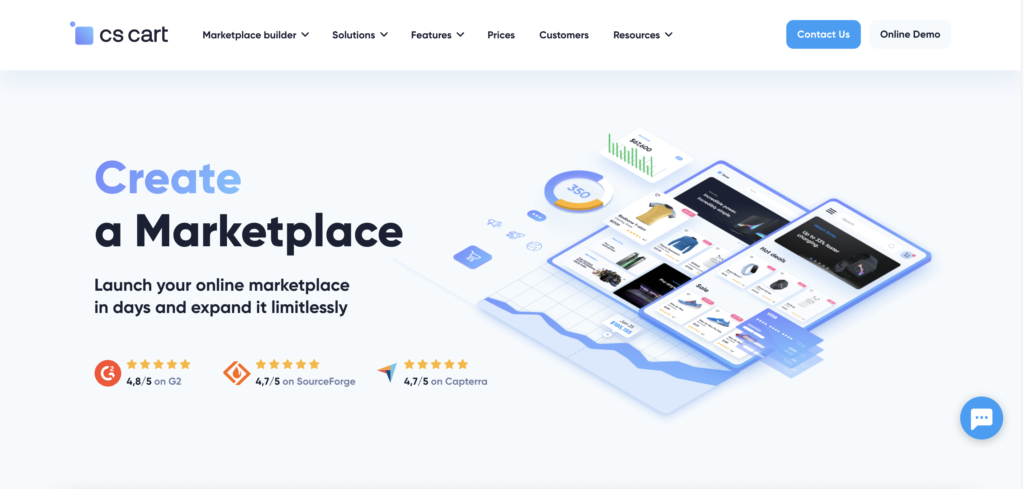
The CS-Cart multi vendor marketplace software is an American-made software. The company is based in San Diego. The platform was developed with the primary focus on providing administrators full control over their multiple vendors and giving the owner the maximum flexibility in configuring monetization options. Therefore, it has all the key features mentioned above.
More about CS-Cart brand:
The administrators on CS-Cart-based online marketplaces have everything they need to accommodate the new web vendors on the website.
Each new online store seller picks the most suitable vendor plan with pre-set conditions and gets a separate micro online shop with a personal fully-featured dashboard and reporting. Vendors have everything they need to operate their stores and they do so with ease even having no previous experience with an online marketplace solution. Inventory management is also transparent yet powerful, which is very important both for newcomers and experienced sellers.
Multi vendor eCommerce platform owners also express their satisfaction with the security level of the online marketplace solution. They say they do not have any security issues during the entire period of using CS-Cart marketplace software. CS-Cart engine serves to create the best multi vendor online marketplace for businesess because it’s feature rich, flexible, customizable, and secure.
Pros:
- Feature rich: over 500 built-in multi vendor marketplace functions
- Secure: meets PCI DSS and GDPR requirements
- Self-hosted: you have full control over the platform and its environment
- Well-supported: gets regular updates and new features
- Best customer care: the technical team helps with issues, makes audits and modifications
- Multi-device: Multi-Vendor marketplace mobile app
- Multiple payment gateways: 70+ payment methods for different regions
Cons:
- The response delay of the customer care team due to the timezone difference
- The translations into other languages are not always perfect
- Users say they would like to see more powerful and attractive multi vendor marketplace themes for in the future
Pricing plans: from $1,450/one-time. Free trial available.
Capterra Rating: 4.7
Yo!Kart Marketplace Software
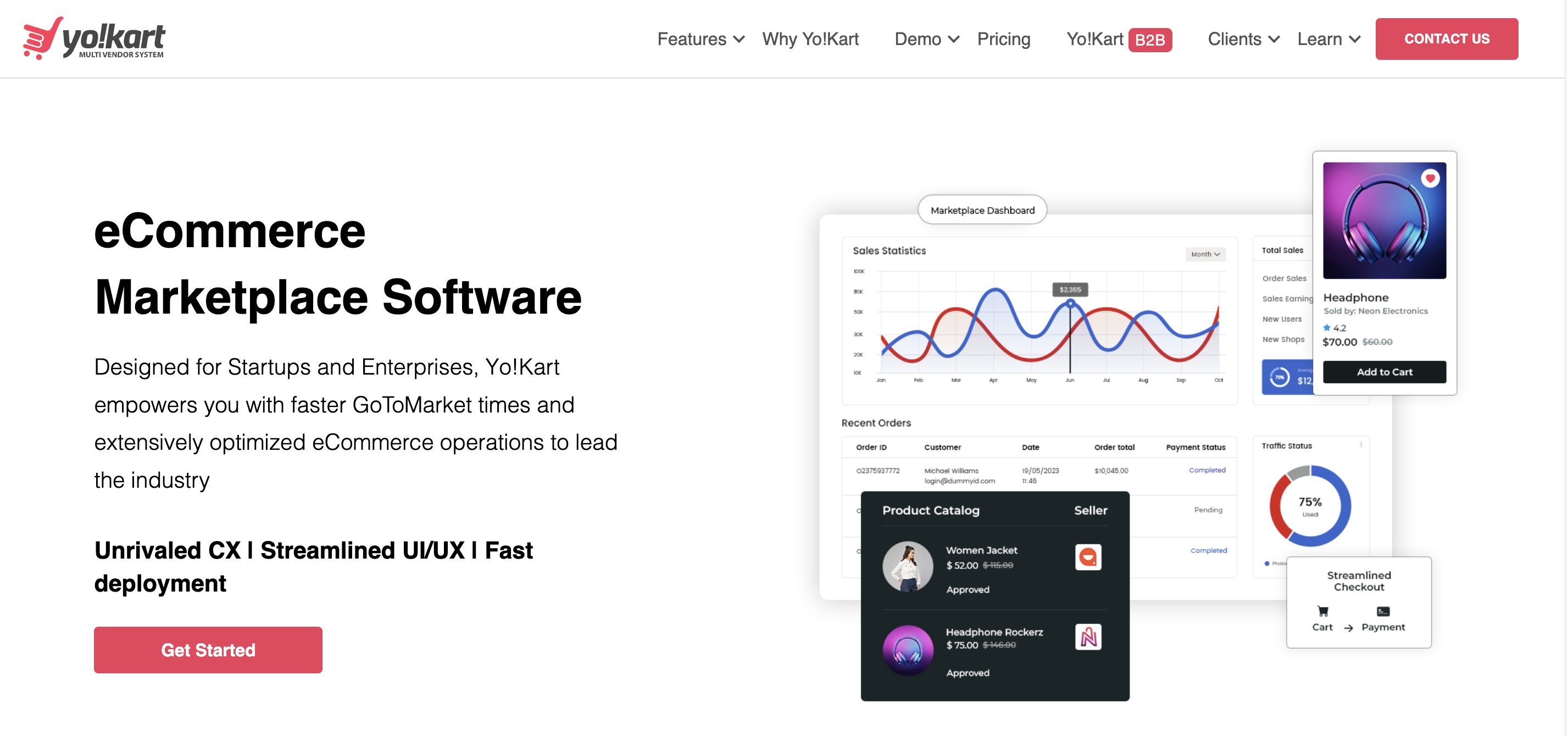
Yo!Kart is a cloud-based multi vendor marketplace solution that is gaining popularity over the last couple of years. However, being one of the youngest multishop solutions (emerged in 2015), it is still not recognized by some technology.
Yo!Kart has multiple functions to run a successful multi vendor eCommerce website with ease such as simple payment processing, mail marketing tools, social media platforms integration, great interface, and highly appreciated user experience. Ranking in search engines pages is a piece of cake with simple yet thorough SEO optimization tools included in Yo!Kart. Yo!Kart offers user-centered design, a vendor app, and a mobile marketplace app.
Pros:
- Great storefront design
- Convenient and easy to use
- Powerful SEO tools
- Mobile marketplace application availability
Cons:
- Yo!Kart owners consider the multi vendor marketplace system very inflexible: Even the slightest change requires a code modification
- Users reported that hiring a third-party developer for help voids the one year guarantee shipped with the license
- The product upgrade strategy is not clear, and ensuring high security is costly.
Pricing plans: from $999/one-time
Capterra Rating: 4.2
Jungleworks Yelo
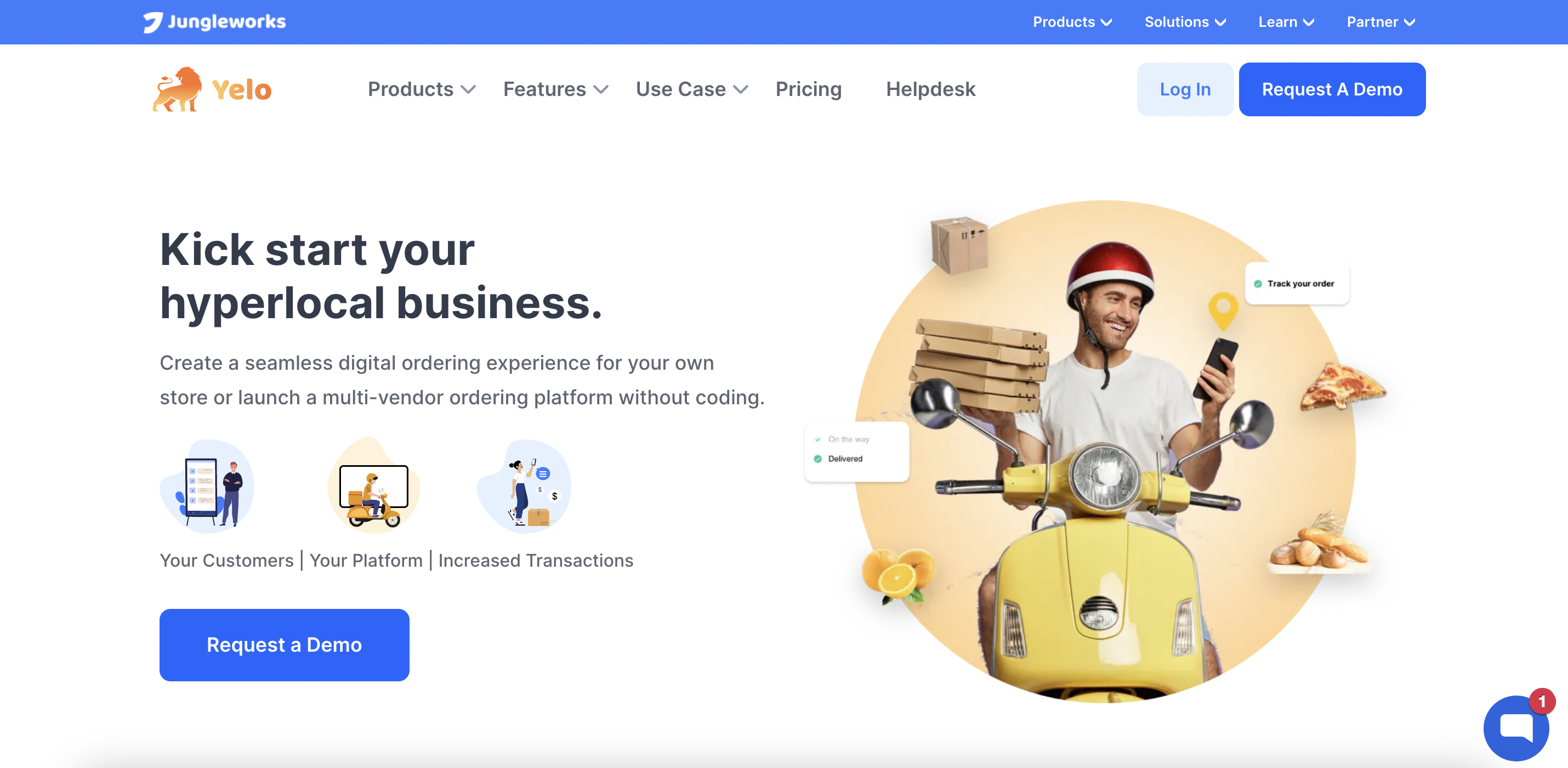
Yelo is a SaaS marketplace platform for starting a local multi vendor marketplace for small businesses. It’s a robust solution for building local companies’ aggregators to allow them to sell their products online in the region. Yelo gives businesses a suite of ready tools to automate their sales, logistics, and marketing.
This cloud based eCommerce solution focuses on three major components of a ordering and delivery website for entrepreneurs:
- Ordering suite: features that allow consumers to order products and services from an entrepreneur online via a mobile app or a website.
- Delivery suite: features that allow entrepreneurs to manage their logistics with delivery services integrations.
- Customer service suite: a set of functions to effectively communicate with buyers and build trust with them.
Pros:
- Ease of use for untrained entrepreneurs
- Fast time to market
- Great for starting MVP
Cons:
- Functionality and design customization is limited
- On Capterra and G2, there are a lot of complaints on their customer service
- Search is poor
- Slow multi vendor marketplace performance in some cases
- Missing basic functionalities like Product variant pricing, price display inclusive taxes until checkout, correct tax reports
Pricing plans: $208/month
Capterra Rating: 3.8
Spryker
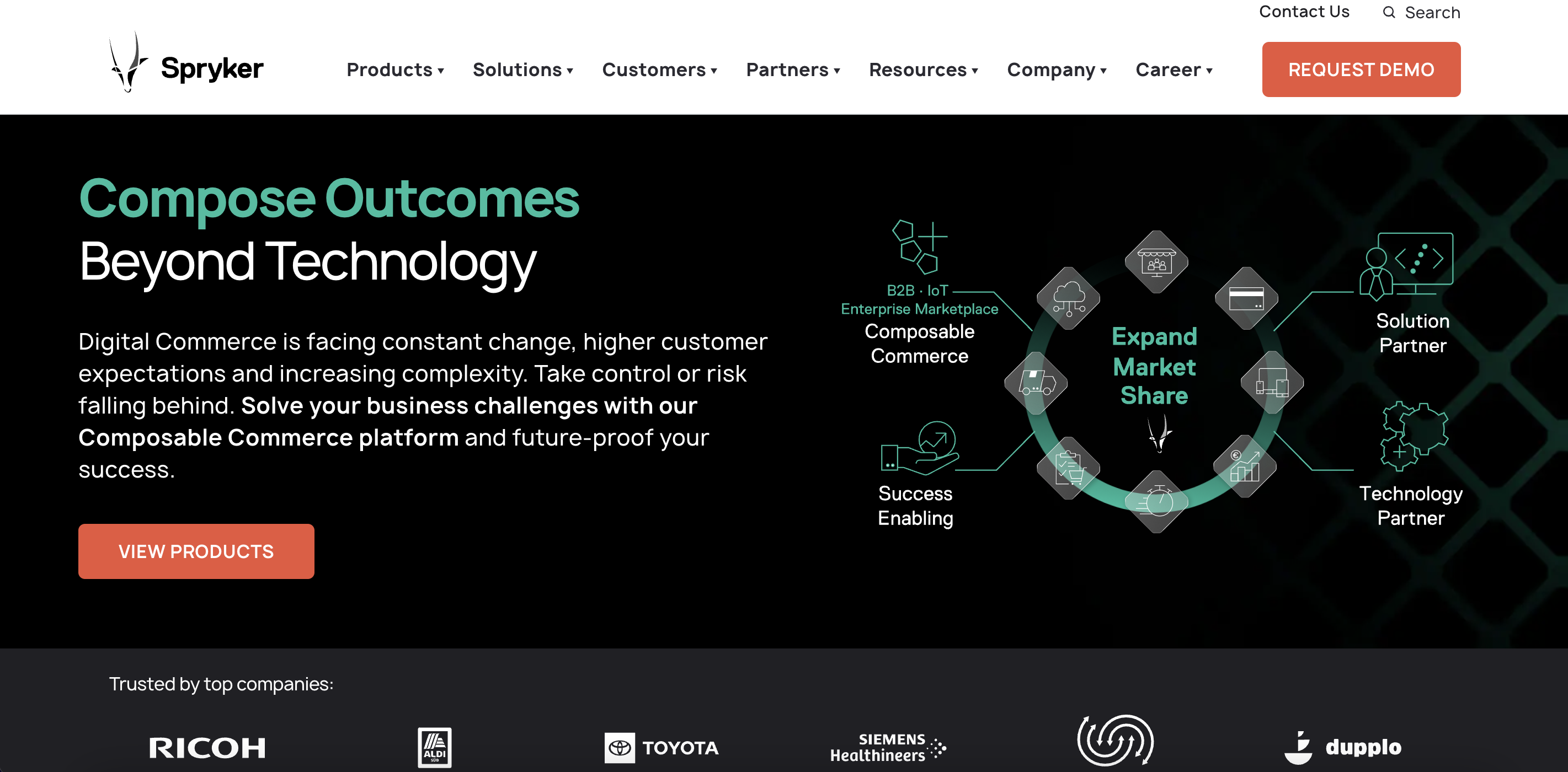
Spryker is a platform as a service marketplace system (PAAS). And what’s cool about this platform is that Spyker is a headless solution. It means you can integrate its backend to your existing frontend. For example, if your company has a well-known brand and recognizable website design, you can keep it and convert your site to an online marketplace. This is achieved by Spryker’s API-first approach.
The company has been on the market for 8 years. It’s based in Germany and has offices worldwide. This multi vendor marketplace platform powers over 150 projects, which is not that big a number. But their customers are all Enterprises so the projects are quite big.
Pros:
- Fast time-to-market
- Headless solution
- Wide range of built-in features for different scenarios (B2C, B2B, D2C, etc.)
- Customizability
Cons:
- Custom development takes much time
- Need for developer to maintain the platform
- Not so easy to set up by yourself
- Modularity causes many dependencies among different modules
- People on G2 also complain on the lack of communication
Pricing plans: six-digit prices, not specified by the company
G2 Rating: 4.4
Mirakl
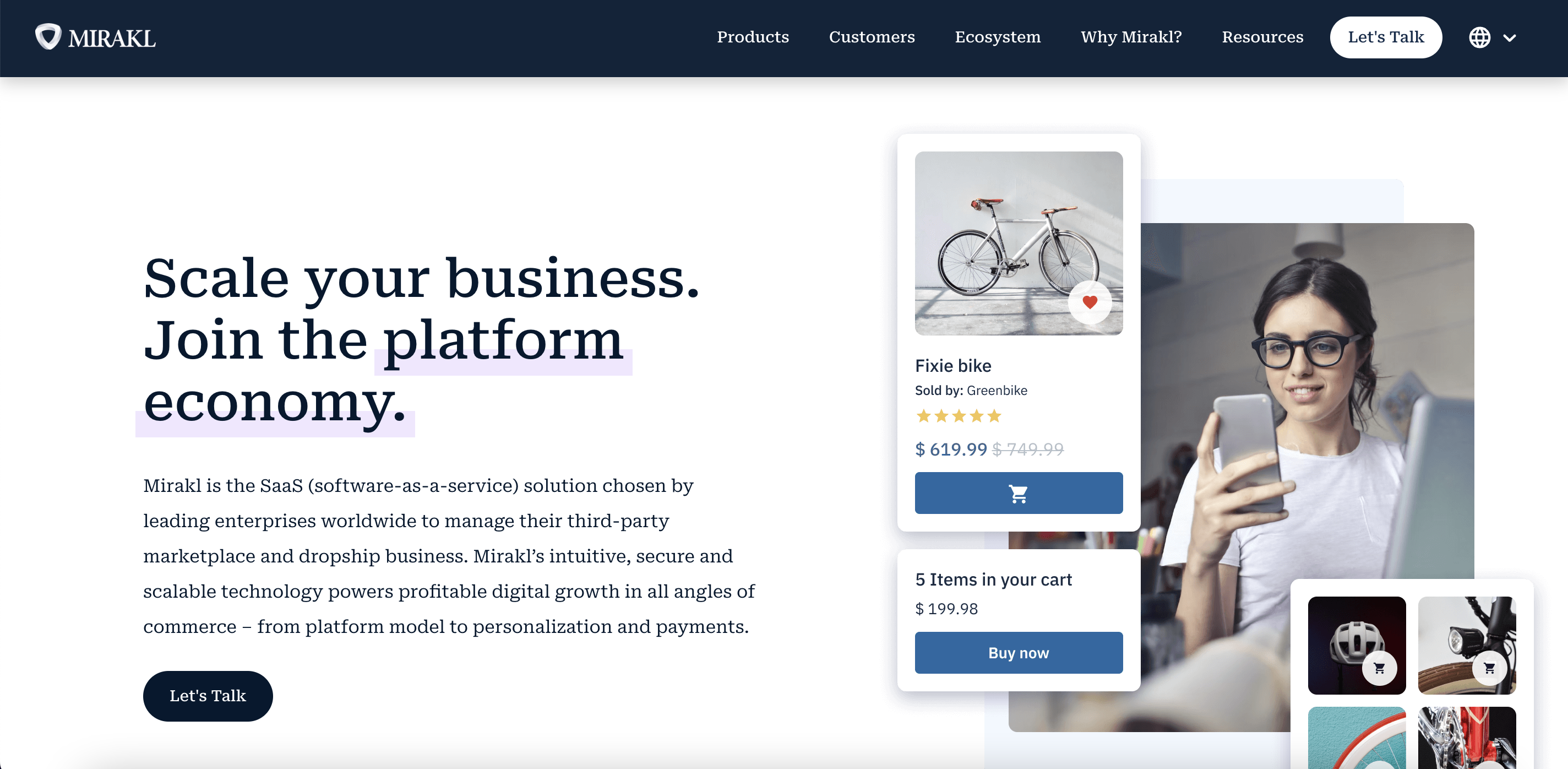
Mirakl is close to Spryker: it’s a headless marketplace solution for SMBs, Mid-size companies, and Enterprises. Being a headless solution, Mirakl integrates with your existing frontend and allows you to connect third-party sellers and service providers on your platform.
Mirakl focuses on process automation: vendor onboarding, quality control, order management, logistics, and other important aspects of an online marketplace. Just like Spryker, Mirakl doesn’t have many clients due to the specificity of its target market—Enterprises. But they have really large projects and world-known clients.
Pros:
- Good customer service
- Ease of integration via API
- Wide range of multi vendor marketplace features
Cons:
- Expensive—requires much upfront investment
- Not the most easy-to-use platform
Pricing plans: Custom pricing depending on requirements. 6-digit prices.
Capterra Rating: 4.4
Arcadier

Arcadier is the SaaS marketplace software that enables businesses, SMEs, local communities, government agencies, and entrepreneurs to build and manage their multi vendor marketplace platforms quickly, efficiently, and affordably.
Unlike most other SaaS marketplace software that offer a templated solution for all purposes, Arcadier allows users to choose from a bunch of options—from buying and selling goods or booking services to renting spaces and items and several other business models.
Besides these, they also offer several unique features like multilingual capabilities, private eCommerce marketplaces, and social logins. The ability to edit JS code (which opens the possibility of additional customization and the ability to add our own payment service providers).
This cloud based eCommerce solution also got a Freemium plan where the pricing plan scales up with the number of transactions on marketplace platforms.
Pros:
- Easy to start an eCommerce marketplace platform
- Ready-made templates for certain business model
- Affordable monthly fee
Cons:
- It’s a SaaS multi vendor marketplace platform: you don’t own it 100% and you have to pay monthly
- Limited on terms of customization
- There are complaints that in case you need a feature that requires API, the cost skyrockets.
Pricing plans: from $79/month
Capterra Rating: 3.6
Sharetribe Marketplace Software
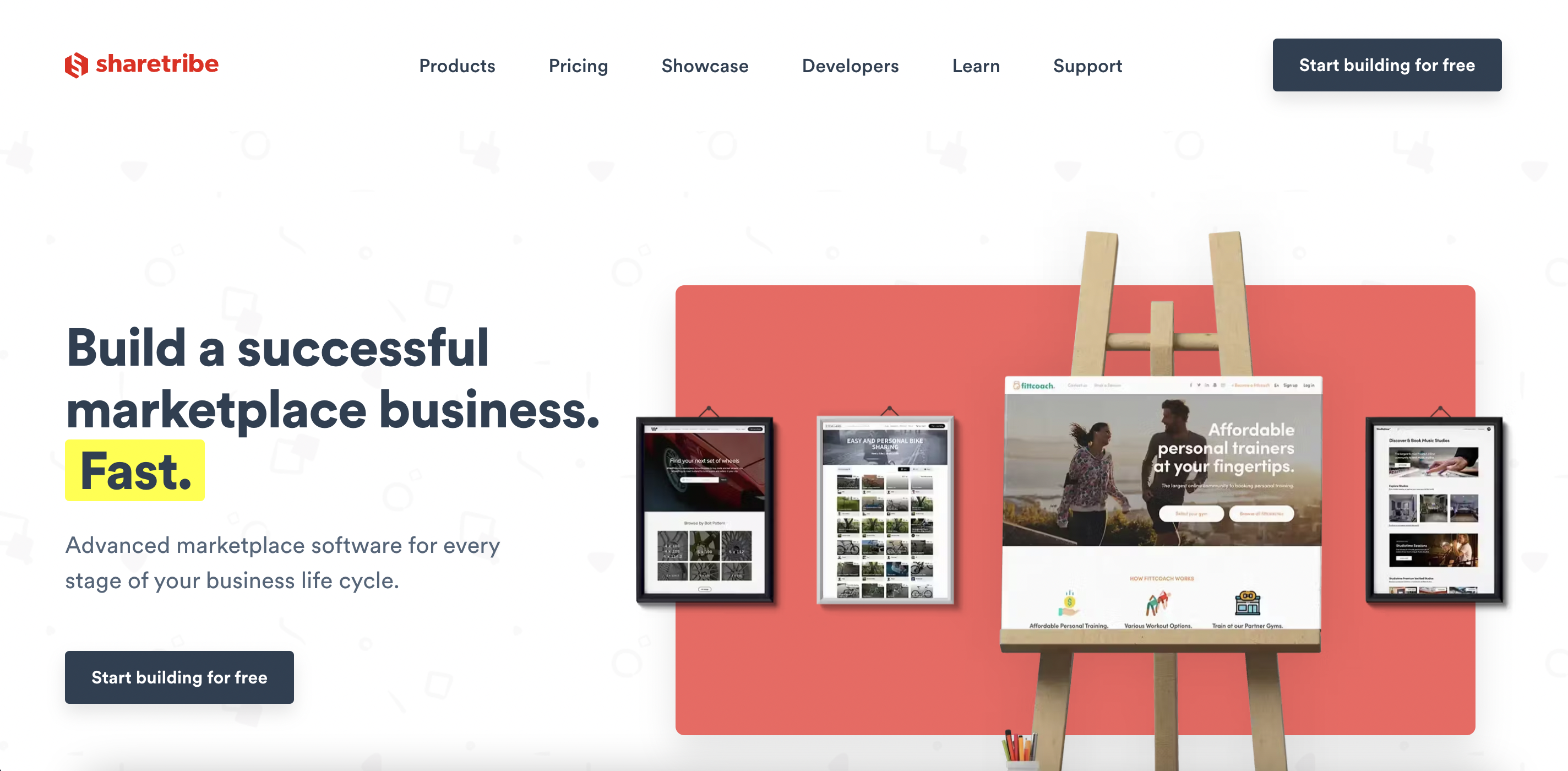
Sharetribe is one of the popular SaaS platforms for building and launching a multi vendor eCommerce platform quickly. The software allows users to sell products or services online without any technical assistance as there is a possibility of creating a no-code marketplace. Check out our Sharetribe and CS-Cart comparison.
It is good for hosting, transactions and online payments. The company is developing and they are improving by adding new features and technologies.
Pros:
- Easy to start
- Possibilities for no-code development
- Good technical support
Cons:
- Basic tariff does not allow you to remove the label “Sharetribe”
- Some customers consider that proportion price-features is not fair if only it is not the premium subscription
- Customers face with lack of functionality in general
- Lack of opportunities for grow and scale
Pricing plans: from $99 per month
Capterra Rating: 4.4
Shopify marketplace system

Shopify is a not initially a marketplace system. They mostly focused on building eCommerce websites but there are also possibilities to create multi vendor eCommerce marketplaces via a multi vendor marketplace plugin. It offers a professional online storefront, a credit card accepting payment solution. You do not need to pay a developer to create an online store.
There are a number of different templates which should suit various business models. It may seem a bit complex for the first time but customers usually adapt to it.
Pros:
- Easy integration of multi vendor marketplace with third party apps
- Fast loading
- Round the clock technical support
Cons:
- Some customers consider that Shopify’s conditions are not clear.
- Does not fit to some niches since there is no functionality for specific products and services\
- Lack of opportunities for grow and scale
Pricing plans: 29-299$ per month
Capterra Rating: 4.5
Marketplacer
With Marketplacer, multi channel businesses can establish a digital marketplace where multiple sellers can create their own profiles, manage product catalogs, process orders, handle payments, and engage with customers. The platform offers a range of customization options, allowing marketplace operators to tailor the appearance and user experience of their multi vendor marketplace to align with their brand identity. Marketplacer also provides administrative tools for overseeing seller onboarding, setting commission structures, managing customer support, and monitoring marketplace performance.
Marketplacer is suitable for a variety of industries, including retail, services, and B2B sectors. It caters to eCommerce businesses of all sizes, from small startups to large enterprises, and offers scalability to accommodate multi vendor marketplace growth over time. The platform’s user-friendly interface and intuitive administration dashboard make it accessible to users with varying levels of technical expertise.
Pros:
- Robust Marketplace Functionality: Marketplacer offers a comprehensive set of features specifically designed for multi vendor eCommerce marketplaces. It enables businesses to create a multi-vendor platform where multiple sellers can list and sell their products, giving you the flexibility to cater to a wide range of industries and business models.
- Customizable and Scalable: The software provides a high degree of customization, allowing you to tailor your marketplace to your brand’s unique identity. It offers a range of themes and templates, along with customization options for branding, layout, and user experience. Additionally, Marketplacer is designed to scale as your multi channel business grows, accommodating an increasing number of sellers and products.
- Streamlined Seller Management: Marketplacer simplifies the process of managing multiple sellers on your marketplace. It offers features such as seller onboarding, product catalog management, order processing, and payment management, providing a seamless experience for both marketplace operators and vendors.
- User-Friendly Interface: The platform is intuitive and user-friendly, making it accessible to users with varying levels of technical expertise. The administration dashboard is well-organized and easy to navigate, allowing you to efficiently manage your marketplace operations.
Cons:
- Cost: Marketplacer’s pricing can be a significant drawback for small businesses or startups on a tight budget. The software operates on a subscription-based model, and while it offers value for established eCommerce marketplaces, the pricing might be prohibitive for eCommerce businesses in the early stages of growth.
- Limited Third-Party Integrations: While Marketplacer provides a solid foundation for running an online marketplace, its range of third-party integrations is relatively limited compared to some other ecommerce platforms. This can be a drawback if you rely heavily on specific integrations for your multi channel business operations.
Pricing plans: $299/month
Capterra Rating: 4.9
BigCommerce Multi Vendor
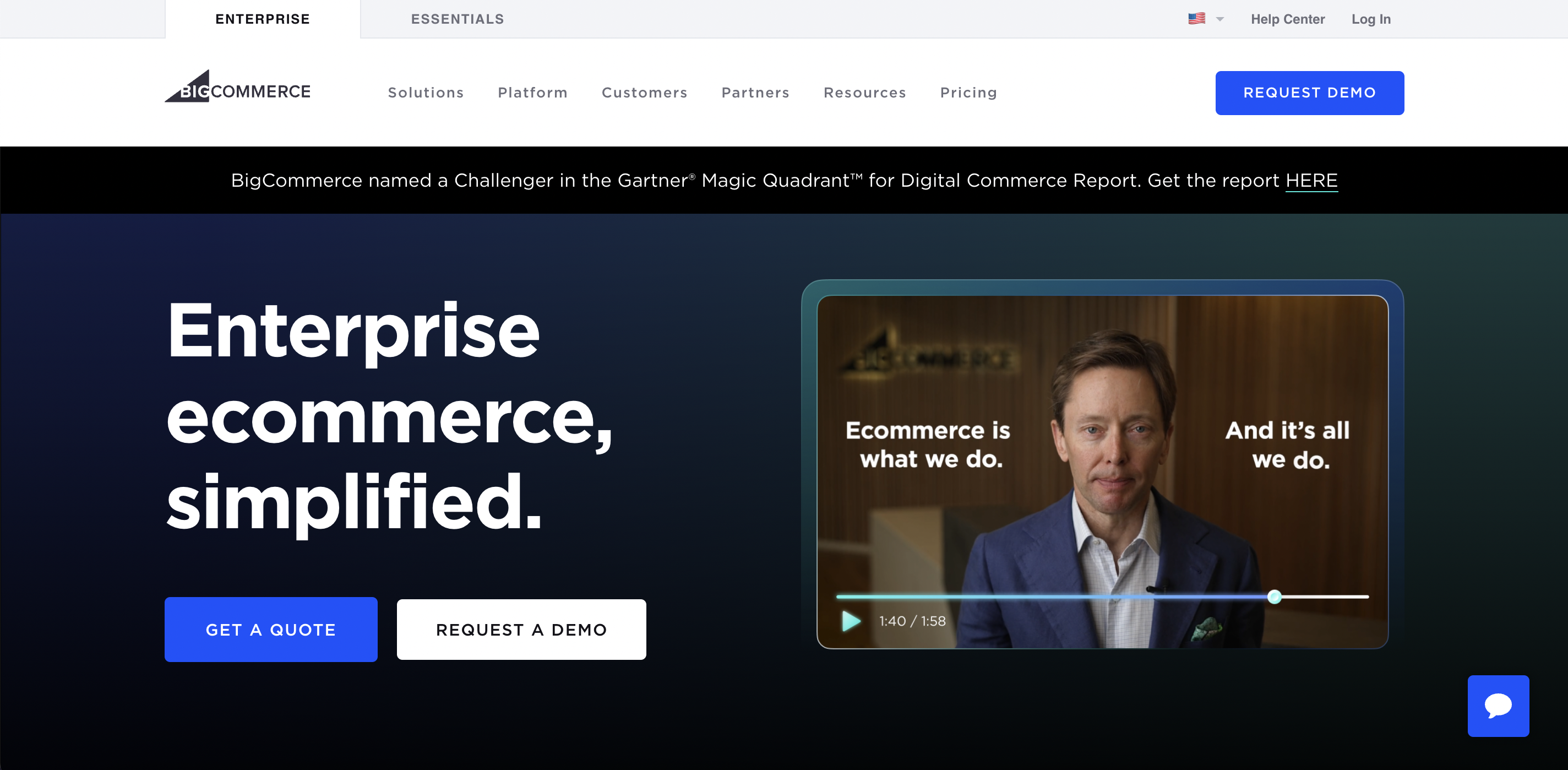
To convert your BigCommerce store to a full-fledged eCommerce marketplace, Webkul has developed a multi vendor marketplace plugin called “BigCommerce MultiVendor Marketplace” that converts your single admin online store to a multi seller platform. It facilitates the process of adding product vendors and keeping track of their orders and sales.
The multi vendor marketplace is equipped almost with all the features described above including features for creating various plans for the sellers, better payout system for managing the payment process to marketplace vendors.
The developers of the plugin put an emphasis on flexible product approval functionality. They made the product management more simple and efficient. It is very handy for a seller to add a product. It gives you an option for auto-approval of the product whenever a merchant adds a product. If you want to approve a product manually then an admin can approve the product manually by configuring some settings. With this functionality, product approval becomes very easy.
Pros:
- Easy to convert your website to a professional multi vendor marketplace platform
- A flexible product approval system
Cons:
- It’s not a standalone product—just an extension, which can result in stability and compatibility issues
- You have to run a shop on BigCommerce and pay monthly
- Only basic multivendor functionality
- BigCommerce MultiVendor website owners complain that the themes are too similar to each other
- There are reports that limits are placed on annual online sales pushing you to upgrade
Pricing plans: $29.95/month. Free trial available.
Capterra Rating: 4.4
Adobe Commerce (former Magento) Extension

Multi Vendor marketplace Module is a popular extension for Magento which turns a website into fully-functioning multi vendor marketplace platforms.
Magento is open source marketplace system but unless you’re a specially trained Magento developer or a whip-smart coder you’re going to have to invest in bringing on talent to create and publish your store.
Magento offers a complete dashboard of its own to your online vendors. This dashboard has all the options needed for a merchant to manage their products, see customer reviews, check out wishlists, newsletter subscriptions, and more. It also includes a profile page for each eCommerce seller to display their information. This profile page also shows the customer reviews and ratings publicly.
The multi vendor marketplace solution also offers a flexible commission system. It allows you to charge a different commission from each vendor depending on their products. Or, you can fix the commission structure to be the same for multiple vendors.
Pros:
- Rich functionality
- Great customizability
- Flexible commission system
- Free eCommerce software
Cons:
- Has a long learning curve: hard to use and customize
- Not so easy to develop
- There are reports of continuous security issues
- Costly custom development
- It’s a plugin, not a standalone multi vendor marketplace platform
Pricing plans: $349/one-time
Capterra Rating: 4.3
WCFM Marketplace
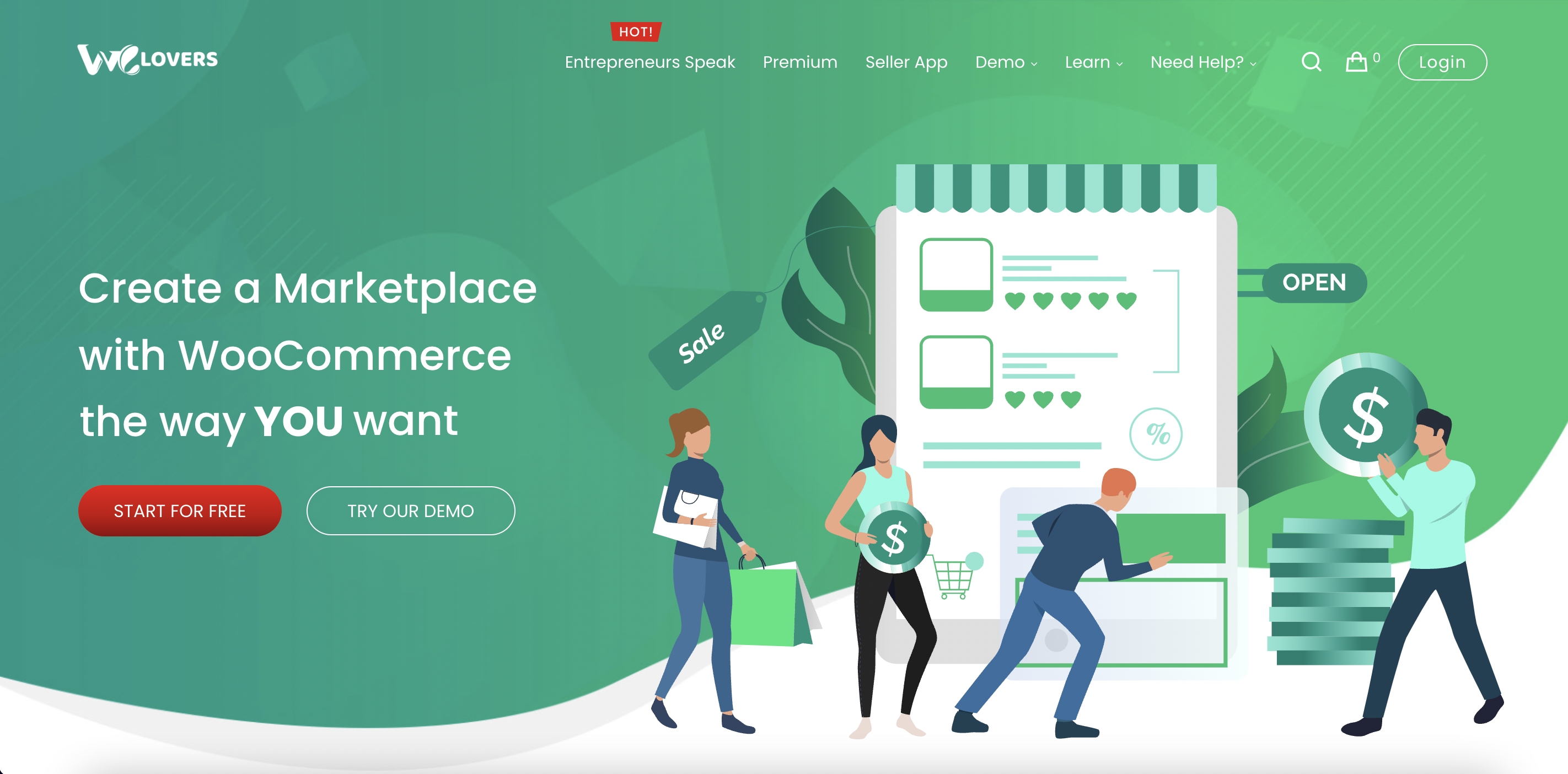
WCFM is a multi vendor marketplace plugin by WC Lovers.
The core version of WCFM is available for free on WordPress Plugins and offers quite a lot in terms of features.
The plugin core offers both the basic vendor management you usually expect as well as more advanced features like reverse withdrawals, seller verification and multiple marketplace sellers offering a single product.
Among the WCFM customized features like Flexible Commission, Refund Request, Withdrawal & Reverse Withdrawal, Ledger Book, Zone & Country Wise Vendor Shipping, Store Inquiry & Review, and Stripe Split Pay.
There is no official list of supported WCFM themes, but the developers claim it does support all WooCommerce themes.
Pros:
- Free marketplace system
- Has all the basic features
- Large community
Cons:
- There are complaints that they experience inconvenience with product approval and shipping tracking functionality
- Setting up payments to vendors is difficult
- It’s basically a plugin, not a standalone multi vendor marketplace solution
Pricing plans: Free
Capterra Rating: 4.3
WordPress Dokan Plugin

Dokan is the best multi vendor marketplace solution on WordPress, powered by WooCommerce. It’s basically a multi vendor marketplace plugin. It helps you to build your own marketplace similar to Amazon and eBay.
The installation process of the plugin is easy, doesn’t require any technical skills, and takes only about 10 minutes. The experience was made easy with the plugin because of the guided setup that removed much of the confusion.
Dokan comes with a range of extensions that enhances the core capabilities of the marketplace plugin. You can select these extensions depending on your requirements and set up the WooCommerce multi vendor marketplace platform.
For example, “seller verification” is an extension that lets you check the authenticity of your sellers by obtaining their social profiles, phone numbers, and photo verification. Dokan Simple Auctions allows vendors to create auction stores so they can create their own versions of eBay. Dokan Subscriptions charges your vendors with product limits.
Dokan is mobile-friendly, vendors can manage orders, see if an order is processing or pending, and even ship products to the billing address on the go.
Pros:
- Great basic functionality
- Easy installation
- Large community
Cons:
- It’s a multi vendor marketplace plugin, which can result in stability, compatibility, and security issues
- Lack of advanced multivendor features
- Users say that due to time difference it is hard to reach the support team
- A lot of necessary business functions, like shipping or invoice, are missing or working incorrectly
- Not search engine friendly
Pricing plans: Free/Donation
Capterra Rating: 4.2
Cocorico Multi Vendor

Cocorico is an open source multishop solution for services and rentals. It is a very powerful solution for in-service and rental marketplaces, such as Airbnb, Blablacar, or Drivy. It’s well suited to developers, well-funded entrepreneurs, or larger businesses.
With Cocorico you get quite a few more advanced features than you could expect from the big players’ eCommerce marketplaces, such as a fully integrated and functional calendar, advanced yield management rules, handling of third-party payments and deferred payments, cancellation management, individually customizable commissions for buyers and sellers, and much more.
The multi vendor platform is suitable only for medium and large-scale projects. As for customization, the platform users report that there are a few companies that can adapt the platform to their specific business needs.
Pros:
- A specialized professional multi vendor marketplace platform for services and rentals
- Great specialized functionality out of the box
- Customizable
Cons:
- Not suitable for large retail marketplaces like eBay or Amazon
- It’s hard to find programmers for custom development
Pricing plans: Free
Capterra Rating: 4.1
X-Cart Marketplace System
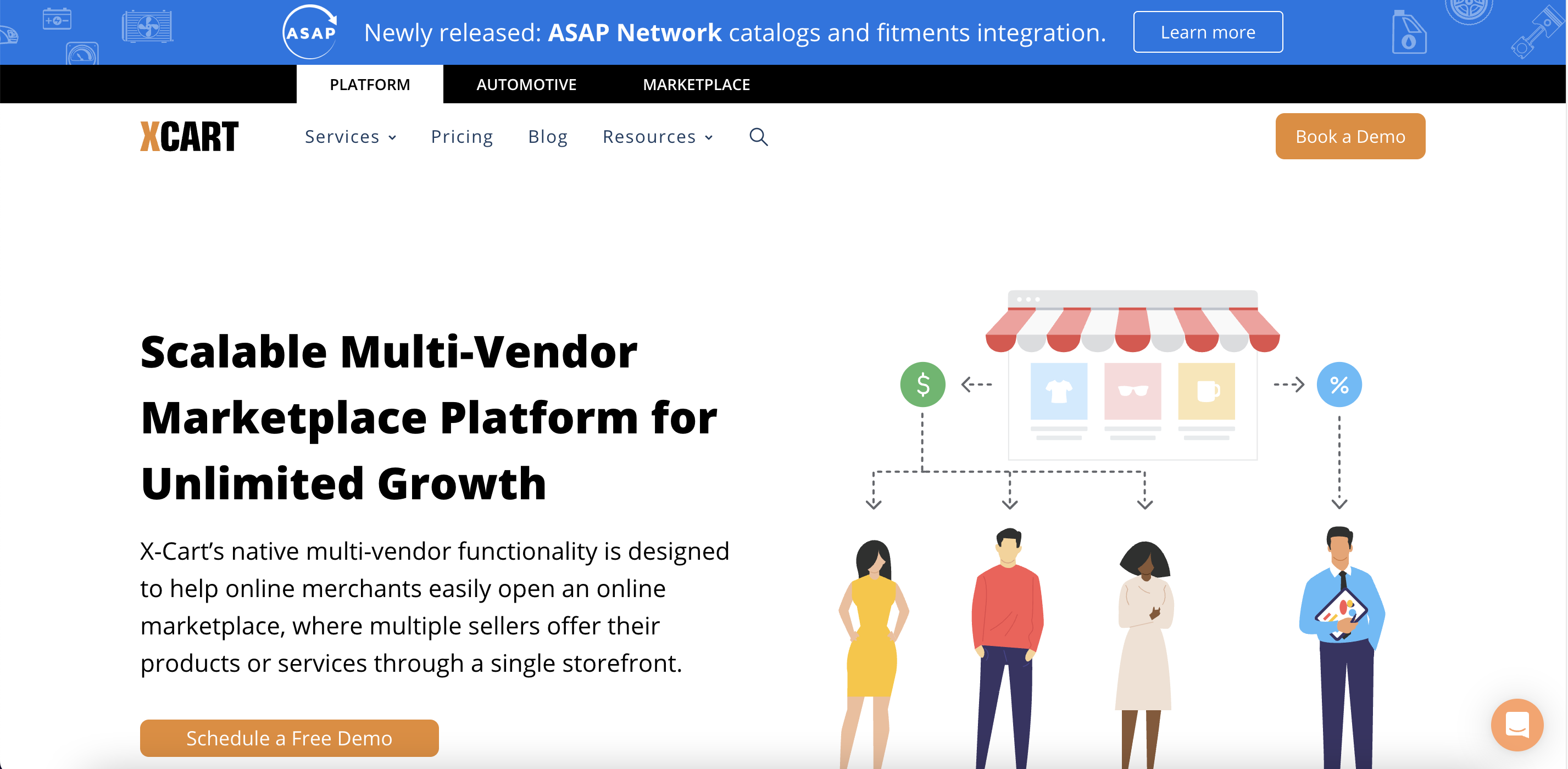
X-Cart Multi-Vendor is an open source marketplace system. It has tons of ready features for marketing (promotions, special offers, reporting, and analytics)—expanded sales channels, handy eCommerce management, excellent customer experience, and more.
X-Cart delivers tools to small and large businesses that require marketplace system. It allows online vendors to sell multiple products through your one storefront. All customers are able to place products from different vendors in a single shopping cart, and the vendors can view orders, change shipping methods and assign products to different categories.
The website admin can set up shipping protocols, modify any product, and register new vendors. The idea behind the admin interface is to give you full control over everything that goes on in your shop. It’s a rather powerful platform, and I can see businesses of any size using this with success.
Pros:
- Rich functionality out of the box
- Customizable
Cons:
- The X-Cart users complain that the default templates are too basic
- There are also reports that this marketplace system is not mobile-friendly despite the stated claims
Pricing plans: by request
Capterra Rating: 4.3
IXXO Multi Vendor
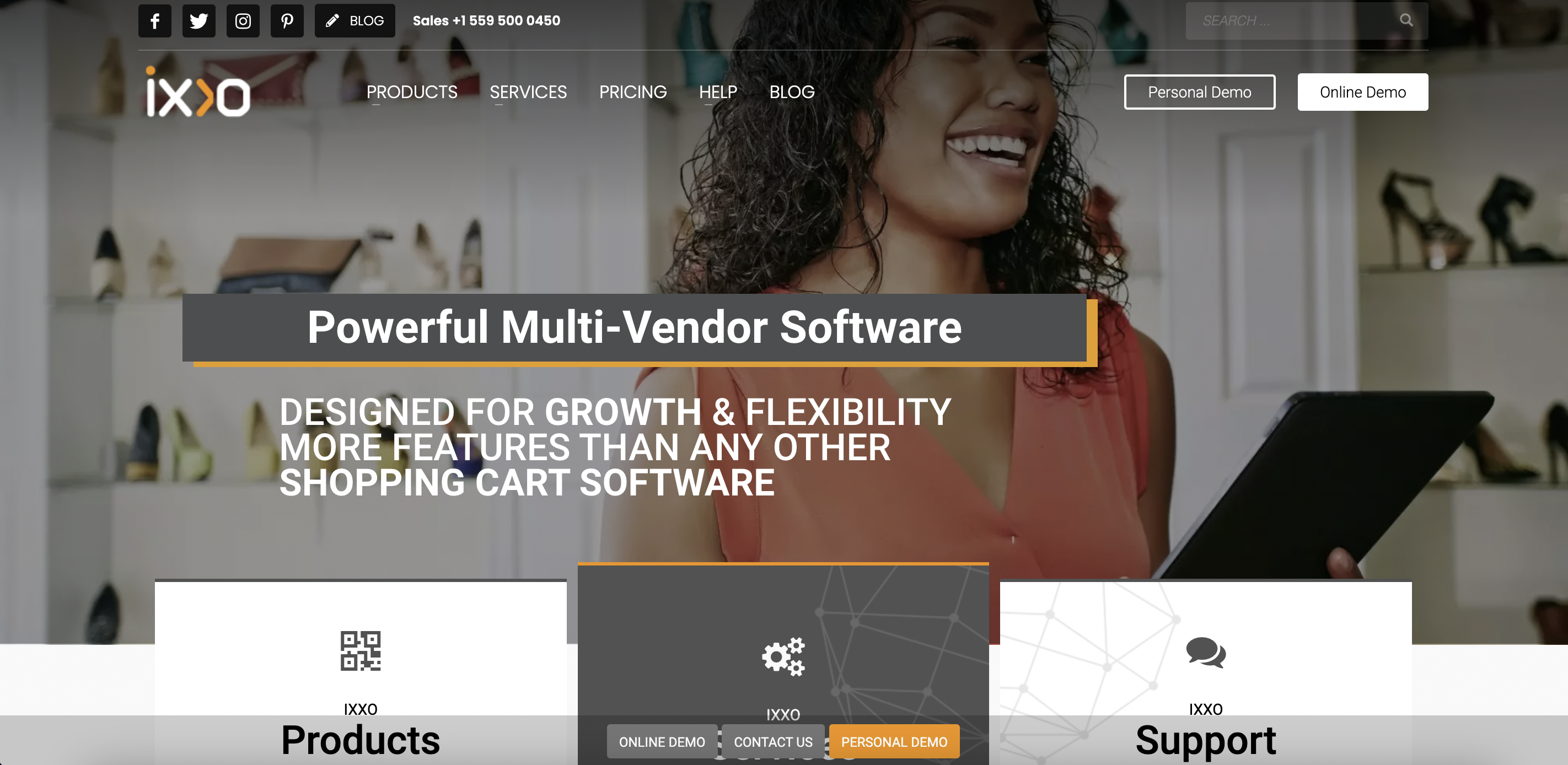
IXXO is a multi vendor software business formed in 2002 in Germany that publishes a software suite called IXXO.
IXXO is an ideal eCommerce software for those who want to open and manage a high-volume marketplace as IXXO offers unlimited products and unlimited web vendor capacity.
The software packs an impressive array of seller-oriented features, themes, and templates that are optimized for both desktop and mobile platforms, marketing capabilities to help both you and your merchants to create and implement effective marketing strategies, and comprehensive SEO tools to help improve online visibility and generate/increase online traffic.
IXXO is an intuitive marketplace system. It allows administrators to configure seller privileges on a per vendor basis. This allows them also to assign the basic vendor features to vendors who have no eCommerce experience and more privileges to merchants who are familiar with running online stores.
IXXO includes online, and 24/7 live support. The support team works and responds in a prompt and friendly manner.
Pros:
- Great basic and advanced functionality out of the box
- Fast and friendly support
- Great for large high-volume multi vendor eCommerce websites
Cons:
- There are complaints that for someone who has no experience with marketplace software, using IXXO can be frustrating
- The lack of up-to-date manuals makes it even more challenging
Pricing plans: from $845/one-time
Capterra Rating: 5
ZielCommerce
ZielCommerce is white-label professional marketplace platform for businesses of any size. White-label means that you can take this software, build a marketplace on it and hide all the signs that point on the platform’s origin, like it yours. It potentially improves the security of a multi vendor marketplace.
The platform is quite a standard marketplace solution, which is positioned as an all-in-one eCommerce platform. The developers say that ZielCommrce is good for small businesses as well as large enterprises. They offer pricing plans for each business size. ZielCommerce focuses on customizability and flexibility.
Pros:
- Flexible pricing of any size of business
- Lightweight
- Relatively customizable
- Ready solutions for industries
Cons:
- Limited in terms of advanced functionality
- No ready add-ons, modules, and plugins
- Limited in terms of scalability
Pricing plans: not specified
Capterra Rating: not rated yet
Which multivendor eCommerce platform is right for you?
In the table below, we made a marketplace platforms comparison based on the user feedback, information on the platforms’ websites, and our impression.
| Feature-richness out of the box | Great customizability | Easy to deploy | Easy to use | Scalability | Product support | Advanced seller management | |
| CS-Cart | ✅ | ✅ | ✅ | ✅ | ✅ | ✅ | ✅ |
| Yo!Kart | ✅ | ⛔️ | ✅ | ✅ | ✅ | ✅ | ✅ |
| Yelo | ⛔️ | ⛔️ | ✅ | ✅ | ✅ | ⛔️ | |
| Spryker | ✅ | ✅ | ⛔️ | ⛔️ | ✅ | ✅ | ✅ |
| Mirakl | ✅ | ✅ | ⛔️ | ⛔️ | ✅ | ✅ | ✅ |
| Arcadier | ⛔️ | ⛔️ | ✅ | ✅ | ⛔️ | ✅ | ⛔️ |
| Sharetribe | ⛔️ | ⛔️ | ✅ | ✅ | ⛔️ | ✅ | ✅ |
| Shopify | ✅ | ⛔️ | ✅ | ⛔️ | ⛔️ | ✅ | ✅ |
| BigCommerce | ⛔️ | ⛔️ | ✅ | ✅ | ⛔️ | ✅ | ⛔️ |
| Magento | ✅ | ✅ | ✅ | ⛔️ | ⛔️ | ✅ | ✅ |
| WCFM | ✅ | ⛔️ | ✅ | ✅ | ⛔️ | ✅ | ✅ |
| Dokan | ⛔️ | ⛔️ | ✅ | ✅ | ⛔️ | ✅ | ⛔️ |
| Cocorico | ⛔️ | ✅ | ⛔️ | ⛔️ | ✅ | ✅ | ⛔️ |
| X-Cart | ✅ | ✅ | ✅ | ⛔️ | ✅ | ✅ | ✅ |
| IXXO | ✅ | ✅ | ✅ | ⛔️ | ✅ | ✅ | ✅ |
| ZielCommerce | ⛔️ | ⛔️ | ✅ | ✅ | ✅ | ✅ | ⛔️ |
How to build a multivendor eCommerce website?
How to create multi vendor marketplace platforms? Well, initially, you have two options to choose from:
- Develop a marketplace from scratch
- Build a website on a ready-made marketplace software
The first option is really challenging not only in terms of effort but also in terms of money and time. Building a multivendor platform from scratch will require years of development. And a project is not about a long start.
The second option is preferable: these days, there is plenty of ready multishop software. We’ve just reviewed a small part of them. These multishop solutions are developed by professionals—experts in eCommerce, so you will get a ready-made package to start your own multi vendor eCommerce website.
The general algorithm is as follows:
- Prepare a hosting on which you will install your marketplace software. You need hosting only for on-premise software. If you decide to use the SaaS eCommerce marketplace platform, then just start from step 2.
- Buy the multivendor marketplace software. It can be a self-hosted platform or SaaS.
- Start a multi vendor marketplace.
- Make a basic setup.
- Start attracting vendors.
FAQ
What is a multi vendor marketplace platform?
A multi vendor eCommerce platform is a trading platform where independent sellers showcase their products on a common storefront and customers choose the best offerings.
How does a multi vendor marketplace work?
The marketplace owner attracts merchants to the platform by offering them special conditions or bonuses. Merchants sell the products to buyers and get the revenue. The multivendor marketplace owner gets commissions for every sale.
What is a three-sided marketplace?
In our blog, we talked about a two-sided marketplace before. A 3-sided multi vendor marketplace where one side of the platform is providing users that the other side monetizes. Otherwise known as B2B2C. For example, a restaurant aggregator is a 3-sided marketplace: the platform gathers restaurants in one place and customers come to the platform and choose a restaurant.
What is a peer-to-peer marketplace?
A peer to peer marketplace is a C2C ecommerce marketplace that connects people in need of a product with people who have that product and are ready to sell or rent it out. On these eCommerce platforms, people can rent out a product in exchange for money or a similar product, usually temporarily.
What makes a marketplace successful?
Three things make a multivendor business successful:
- A well-thought business strategy
- Constant scaling
- A reliable technical base—powerful multishop eCommerce software
How do I start a multi vendor marketplace?
To start a multivendor business, go through these steps:
- Invent a business strategy
- Choose a niche
- Buy the multi vendor software
- Launch your marketplace MVP as fast as you can
- Start attracting vendors
- Analyze the results
- Correct your course if needed
- Start a marketing campaign
How much does it cost to build a multi vendor marketplace?
The final cost of building a multi vendor marketplace platform depends on many factors:
- The solution you will use: on-premise or SaaS
- The additional development you will need
- The hosting plan that will be suitable for your traffic
- And many more.
If you choose a SaaS eCommerce marketplace platform, then there’s no final price—you will have to pay the provider till the end of times.
If you go for a licensed on-premise platform with a one-time fee, prepare at least $1,450 for the license and from $15 to $60 for a hosting monthly.
How much does it cost to build a marketplace app?
Many companies that offer multi vendor marketplaces also provide you with a seller app for free. Some also offer an application for customers. For example, with CS-Cart Multi-Vendor Plus, you will get a customer app for free—we will build it and upload it to the app stores. Developing a marketplace app from scratch can cost you thousands of dollars.
How long does it take to build a marketplace?
With modem multivendor marketplace software, you can launch a marketplace MVP in a week or less.
How does an online marketplace make money?
The marketplace takes commissions from merchants for every sale. Also, sellers often pay monthly for selling on the platform. Some multivendor eCommerce websites also offer ad placements on the storefront.
How do I find a vendor?
There are three basic ways to find merchants for your multi vendor eCommerce website:
- Attract them from other marketplaces like Amazon
- Get potential sellers on online and offline resources: business directories and aggregators, hobby clubs, networking groups, trade associations, online forums, offline stores, and workshops
- Start an ad campaign to attract sellers by offering them profitable terms
How do you connect with vendors?
Connect with vendors directly in social media, online communities, hobby clubs, networking groups, trade associations, online forums, offline stores, and workshops.

Yan Anderson is the Head of Content Marketing at CS-Cart with over 10 years of experience in the eCommerce industry. He's passionate about explaining complicated things in simple terms. Yan has expertise in building, running and growing eCommerce marketplaces. He loves to educate people about best practices, new technologies, and trends in the global eCommerce industry.